Flat vs Reducing Interest: The Hidden Truth
Don't fall for low flat rates. Learn how reducing balance interest works and why it's almost always the cheaper option for your loan.
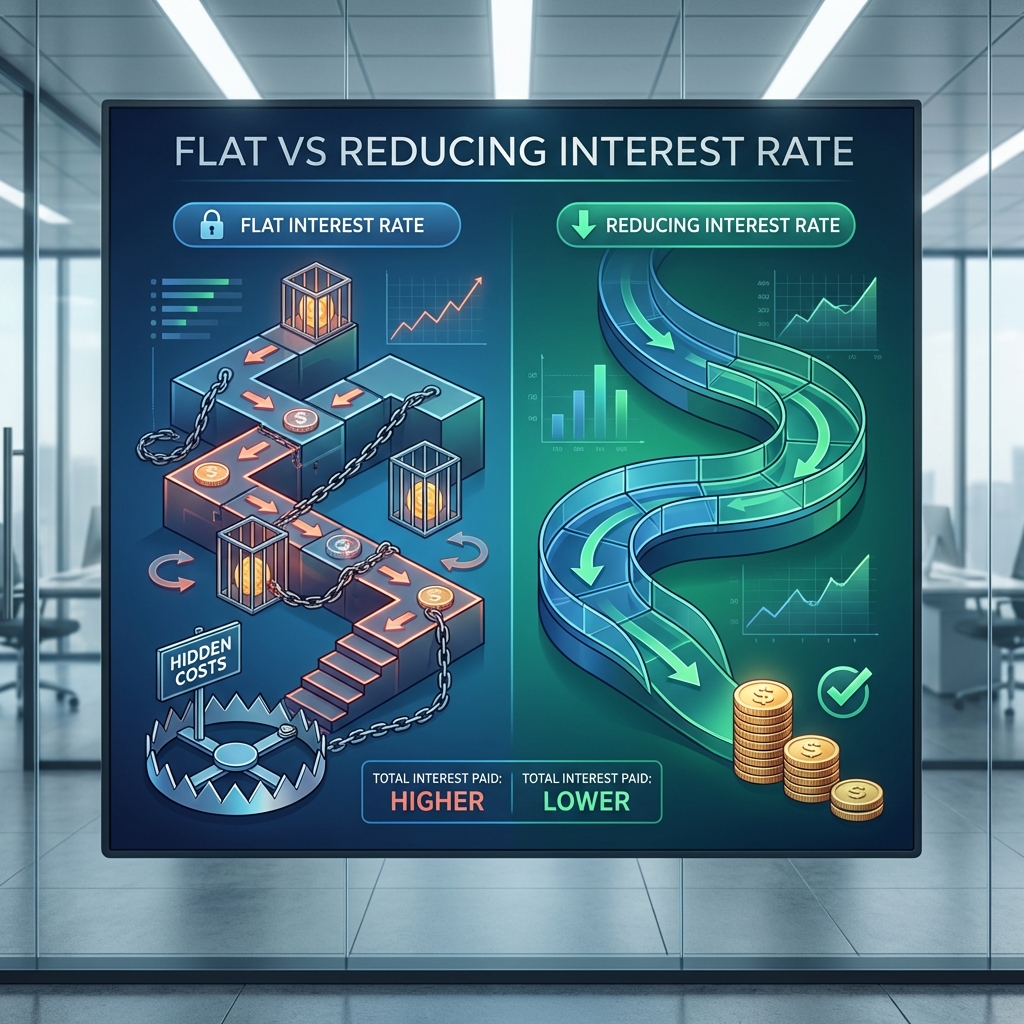
A "Fixed Rate" of 10% sounds better than a "Reducing Rate" of 15%, right? Wrong. In the world of loans, the way interest is calculated is more important than the percentage itself.
The Flat Rate Trap
In a Flat Rate Loan, interest is calculated on the full principal amount throughout the entire tenure. Even after you've paid back 90% of your loan, you're still paying interest on the 100% you originally borrowed. This is why flat rates are often used in "too good to be true" personal or car loan offers.
The Reducing Balance Advantage
A Reducing Balance Rate calculates interest only on the outstanding principal. As you pay your EMIs, your principal decreases, and so does the interest you owe. Over a 5-year tenure, a 10% Flat rate is roughly equivalent to an 18%+ Reducing rate!
The Real Math
Flat Rate (10%)
₹1,50,000 Total Interest
On a 5 Lakh loan for 3 years
Reducing Rate (10%)
₹81,232 Total Interest
On same loan. You save ₹68,768!
"Always ask for the 'Effective IRR' or the reducing balance equivalent before signing any loan document."